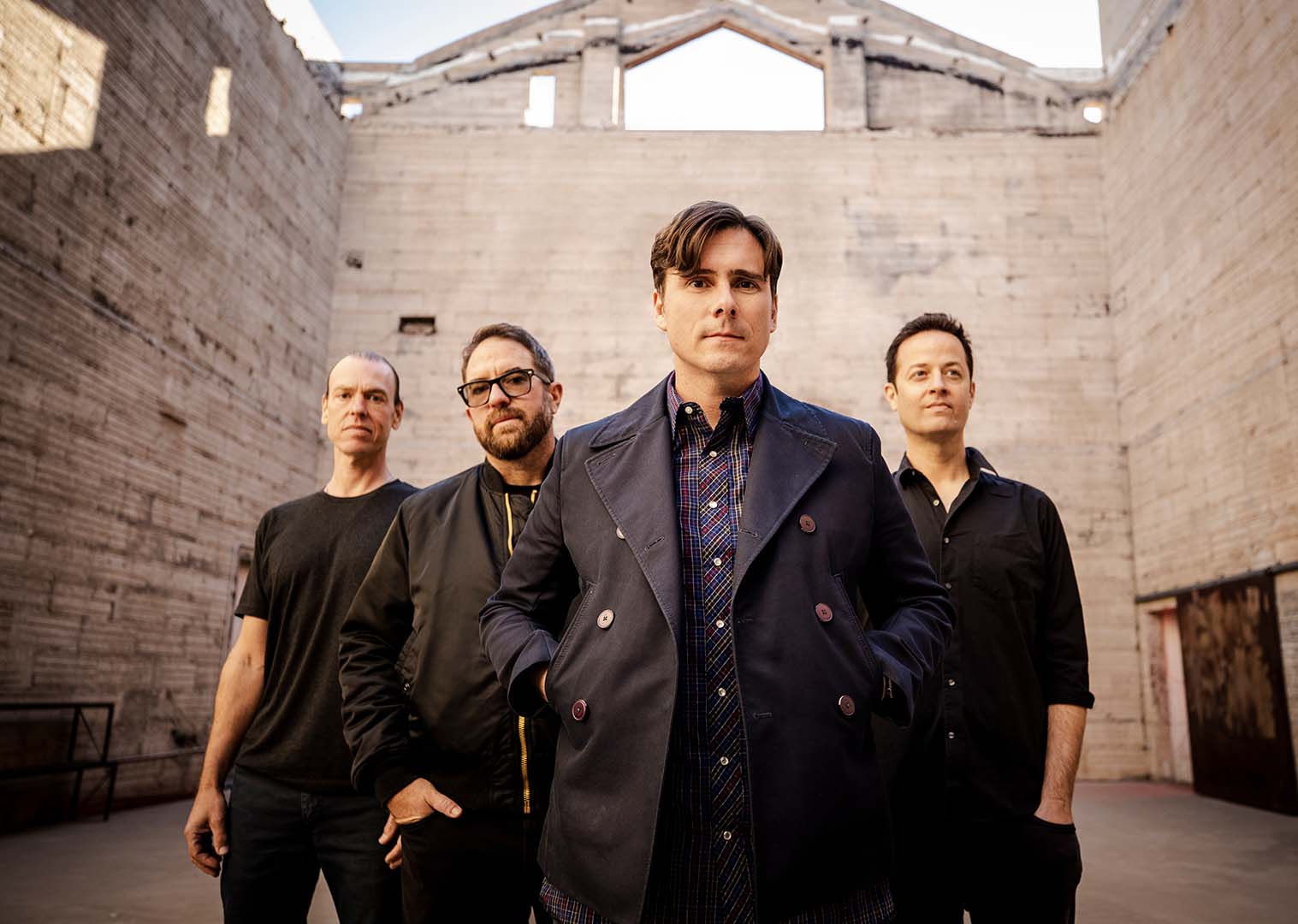
Jimmy Eat World are celebrating nearly three decades and ten albums of existence, all but one with the current lineup of lead vocalist and lead guitarist Jim Adkins, rhythm guitarist and backing vocalist Tom Linton, bassist Rick Burch, and drummer Zach Lind. The Mesa, AZ, four-piece's commercial breakthrough came with the release of several singles from their album Bleed American, with "The Middle" reaching No. 1. Their encore to BA, Futures, featured the No. 1 song "Pain." In October 2019, the band released their tenth album, the critically acclaimed Surviving, which became one of three “chapters” of their 2021 globally streamed series that also includes Futures (Chapter V) and Clarity (Chapter III), performed in their entirety (now available on their YouTube page, here). Jimmy Eat World have played numerous late night shows throughout their storied career, including The Late Show with Stephen Colbert, Jimmy Kimmel Live!, and SNL, and have joined epic festival lineups, from Lollapalooza and BottleRock to Summerfest and Hangout Music Fest.